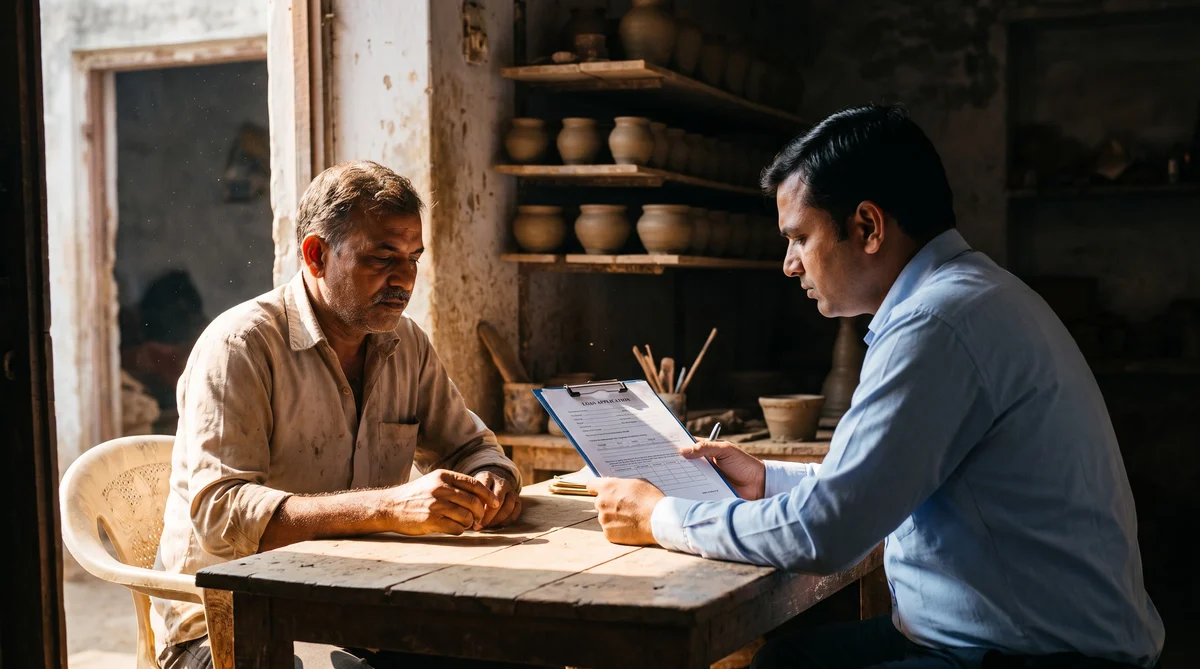
India's AI transformation is no longer a future story — it is happening now, and its most significant impact will be felt by the 63 million MSMEs that form the backbone of the economy. Today's analysis: AI adoption by MSMEs likely to unlock over $490 bn: Google.
Why This Matters Now

India crossed a critical threshold in 2026 — ranked 4th globally in AI readiness by WEF — making AI adoption by MSMEs likely to unlock over $490 bn urgently relevant for MSME owners. For the first time, practical AI tools are within reach of a small business owner with a smartphone and a modest budget.
What Has Changed in 2026

The 2024–2026 wave of generative AI democratised capabilities that previously required data science teams. Tools that summarise contracts, automate customer responses, generate marketing content, reconcile accounts, and predict inventory are now available as affordable SaaS under ₹1,000 per month. Indian vernacular language support has expanded dramatically. What was a genuine technical barrier in 2022 — needing a developer to wire up an API — has largely disappeared. Most of these tools now install in an afternoon through a WhatsApp integration or a browser plugin, with no coding and minimal training required.

The MSME Opportunity

For Indian MSMEs specifically, AI adoption by MSMEs likely to unlock over $490 bn represents a compounding efficiency advantage. Early adopters are seeing 30–40% reduction in administrative overhead, faster customer response times, and higher-quality marketing output at a fraction of the previous cost. The compounding part is often missed: time saved on one workflow tends to free up owner attention for the next one, which is why early adopters report accelerating gains in the second and third quarter of use, not just a flat one-time saving.
3 Tools You Can Deploy This Month

- WhatsApp Business API with AI chatbot — automates lead qualification, appointment booking, and FAQ responses 24/7. Cost: ₹500–2,000/month.
- AI-powered GST reconciliation (ClearTax AI, Zoho Books AI) — reduces monthly close from days to hours. Cost: ₹800–3,000/month.
- Generative AI for marketing (Canva AI, Gemini) — produces social posts, product descriptions, email campaigns in minutes. Cost: ₹1,000–2,500/month.
How to Implement Without Disrupting Operations
Start with one workflow — the one that consumes the most manual time. For most MSMEs this is customer communication or monthly accounting. Run a 30-day pilot. Measure time saved. Then expand. This sequential approach avoids buying multiple tools simultaneously and implementing none properly. Resist the temptation to run the pilot silently — tell your staff what you are testing and why, and ask them directly what friction they hit. The fastest AI rollouts I have observed are the ones where the frontline user, not the owner, ends up championing the tool internally.
The Regulatory Context
India's regulatory environment is evolving in parallel. The DPDP Act 2026 imposes data obligations on AI-enabled systems processing customer data. Verify compliance before deploying any tool that handles customer information. In practice this means checking two things before signing up for any AI tool: where the vendor stores your customer data, and whether they can produce a data-processing agreement if asked. Most legitimate SaaS vendors now offer this by default — treat reluctance to provide one as a red flag. A five-minute vendor check now is far cheaper than a compliance remediation exercise later.
The Data Behind the Opportunity
India's AI adoption data for 2026 presents a striking bifurcation directly relevant to AI adoption by MSMEs likely to unlock over $490 bn. At the enterprise level, AI adoption is near-universal among BSE 200 companies. At the MSME level, adoption remains below 12% despite tool availability and cost accessibility. The gap is not technical — it is awareness and implementation confidence. NASSCOM's 2026 MSME Tech Adoption Report found that 71% of surveyed MSME owners believed AI was 'for large companies', despite 65% already using smartphones and cloud-based accounting software that runs AI under the hood. MeitY's AI for India initiative has trained over 6 lakh MSME personnel in digital tools since 2024. The National AI Mission has earmarked ₹2,200 crore specifically for MSME AI integration by 2027. The window for early adopters — where the competitive advantage is largest — is 2026 and 2027.
Common Pitfalls to Avoid
The most common mistakes MSME owners make when adopting tools related to AI adoption by MSMEs likely to unlock over $490 bn are consistent across sectors and regions. The first is tool proliferation without implementation — subscribing to multiple AI tools in a burst of enthusiasm, then using none consistently because no one owns the integration. The second is using AI for the wrong workflows — automating tasks that are already efficient while neglecting the high-volume, high-error workflows where AI makes the most difference. The third is data hygiene failure — feeding AI tools with incomplete or inconsistent business data and then trusting the outputs without verification. The fourth is ignoring the regulatory dimension — using AI tools that process customer data without verifying DPDP Act compliance. The businesses that succeed with AI adoption consistently do one thing: they assign one person internal responsibility for the implementation, give that person time and authority, and measure outcomes fortnightly rather than quarterly. A fifth, easily overlooked pitfall is treating AI output as a finished product rather than a first draft — customer-facing text, financial summaries, and compliance filings generated by AI still need a human review pass before they go out the door, and skipping that step is where most embarrassing errors originate. Looking two to three years ahead, AI adoption by MSMEs likely to unlock over $490 bn is likely to look less like an optional productivity upgrade and more like table stakes for competing in categories where larger organised players already deploy AI at scale. The MSMEs best positioned are not necessarily the ones with the biggest budgets, but the ones that started early, kept their implementation simple, and built the internal habit of asking 'could this be faster with the tools we already pay for' before reaching for a new one.
"The businesses that deploy AI in 2026 will not just be more efficient — they will be structurally different from those that waited." — Dibyendu Choudhury
Final Thought
The opportunity in AI adoption by MSMEs likely to unlock over $490 bn is concrete and actionable today. The barriers — cost, complexity, technical expertise — have largely dissolved. The MSMEs that deploy in 2026 will look structurally different from their competitors by 2028. The businesses that wait are not simply delaying a benefit — they are allowing competitors to build institutional habits and data advantages that become progressively harder to close.
📬 Join 49,000+ Indian Professionals
The Inner Circle newsletter delivers curated MSME intelligence, leadership wisdom, and strategic insights every week — completely free. Plus receive the 20 Gita Lessons PDF as a welcome gift.
Subscribe Free →Ready to Go Further?
Is your MSME AI-ready? I help Indian businesses understand and deploy practical AI workflows — from automation to decision intelligence. Book a focused strategy session.
Book a Digital Strategy CallPublished 15 July 2026 · dibyenduchoudhury.com