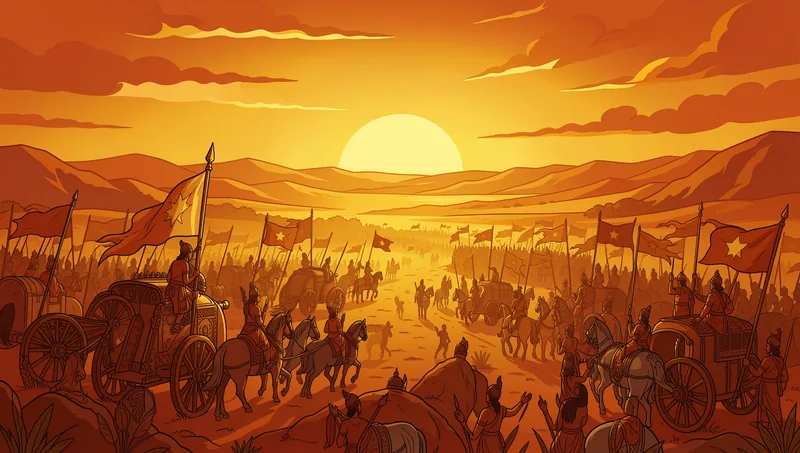
The world is reading the Bhagavad Gita again. Over the past week, global media coverage of this ancient Indian text has surged to levels analysts describe as notably larger and more widespread than any spike seen in recent years. Search interest is climbing across the United States, Europe, Southeast Asia, and Latin America. Academics are revisiting it. Tech founders are quoting it. And in the corridors of uncertainty that define our post-pandemic, post-conflict world, millions of people are turning to a conversation that happened on a battlefield five thousand years ago and finding it shockingly relevant.
As an educator who has taught management through the lens of the Gita for over two decades, I am not surprised. I am, however, asking a harder question: as the world rushes toward the Gita, is India its rightful guardian actually leading this conversation?
A Text Written for This Exact Moment
The Sanskrit shloka that opens the teaching is perhaps the most famous in all of Indic literature: KarmaNy-evAdhikAraste mA phaleShu kadAchana, mA karma-phala-hetur-bhUr mA te sango-stv-akarmaNi. Bhagavad Gita 2.47: You have a right to perform your prescribed duties, but you are not entitled to the fruits of your actions.
In a world convulsed by burnout culture, this single verse cuts through the noise with the precision of a surgeon blade. It asks you to be fully committed without the toxicity of attachment to results. That is not detachment. That is a higher form of engagement that modern psychology is only now beginning to name.
Why the Global Surge Is Happening Now
The world has passed through a decade of compounding shocks: a pandemic that redefined mortality, geopolitical realignments that rewrote the map of trust, and an AI revolution that has made millions question what it means to be human. In moments like these, people do not turn to spreadsheets. They turn to wisdom traditions.
What the Bhagavad Gita offers that many Western philosophical traditions do not is a framework that is simultaneously practical and transcendent. It speaks to an Arjuna who is a warrior, a leader, a son, not a monk in retreat. The battlefield is not a metaphor to be escaped; it is the condition in which dharma must be discovered. For the modern professional facing impossible choices, that framing is electrifying.
Researchers tracking the trend note that this is not confined to yoga studios. It is appearing in executive education programmes, in military leadership curricula, in hospital ethics committees. The Gita has crossed from the spiritual shelf to the strategy room.
What India Must Reclaim
India risks becoming a passive bystander to a global conversation about its own most precious intellectual inheritance. Much of the framing around the Gita globally is being done by Western commentators and diluted self-help adaptations. The depth, the rigour, the devotional gravity of the text are being stripped out in favour of easy productivity hacks.
India educators, authors, and thought leaders have a responsibility to lead this conversation with authenticity. The Gita is not a productivity manual. It is a complete ontology of the human condition, one that took centuries of civilisational wisdom to crystallise. In my own journey as an educator and author, when I explored this intersection in works like Be The Leader, Not A Boss, readers confirmed: India has an urgent duty to lead the Gita global renaissance.
The Gita Invitation to Indian Leaders
Leadership education in India must urgently integrate the Gita not as a cultural ornament but as a living management philosophy. NI-MSME, where I have spent years training entrepreneurs and enterprise development officers, represents exactly the kind of institutional platform from which this conversation must radiate. The MSME sector which employs over 38 crore Indians needs leaders who understand not just financial instruments but the inner architecture of purpose-driven action that the Gita describes as svadharma.
The Bhagavad Gita does not promise comfort. It promises clarity. And in the age of disruption, clarity is the rarest and most valuable leadership resource of all.
Begin With the Text Itself
Do not outsource your engagement with the Gita to someone else summary. Read BG 2.47. Then Chapter 3 on Karma Yoga. Then Chapter 18 on renunciation. Allow the teaching to land as instruction for the specific battle you are currently on the field of. India greatest contribution to global civilisation is not a product or a policy. It is a way of seeing. The world is beginning to remember that. It is time we did too.
What the Global Surge Gets Right, and What It Misses
Give the current wave of interest its due. A verse that once lived only in temple recitation and postgraduate Sanskrit seminars is now being read by a product manager in Berlin and a hospital administrator in Toronto, and that reach is not nothing. It means the underlying insight of the text, that steady action without attachment to outcome is a more sustainable form of ambition than outcome-chasing, is finally being tested against real Western institutional life rather than staying confined to a shelf of comparative religion. Where the surge falls short is depth. Most adaptations stop at Chapter 2 and treat the whole text as a single productivity aphorism, when the Gita's eighteen chapters build a deliberate architecture: from the psychology of grief, through the discipline of Karma Yoga, into the harder territory of Jnana Yoga and Bhakti Yoga, before arriving at Chapter 18's synthesis of duty, renunciation, and surrender. Reading only the opening verses is like judging a symphony from its first bar.
A Practical Starting Point for Indian Institutions
If India wants to lead rather than watch this conversation from the sidelines, the fix is not another translation, it is curriculum. Business schools that already teach case studies from Harvard and INSEAD have the infrastructure to teach a Gita-based decision-making module with the same academic rigour, cross-referenced against modern behavioural economics rather than presented as devotional content alone. Government training institutes, MSME development bodies, and civil service academies are natural first movers, since public administration is itself a daily exercise in duty divorced from guaranteed outcomes. Even at the level of school education, a short, well-taught unit on the Gita's framing of duty and detachment would do more for India's claim to intellectual leadership on this subject than a hundred opinion pieces written after the fact. The raw material already exists in almost every Indian household. What is missing is the institutional will to teach it with the same seriousness the world is now bringing to it from the outside. That will has to start somewhere concrete: a single pilot course, one cohort of civil servants or MSME officers, a semester-long module rather than a one-day workshop, so the teaching has room to move past the opening verse and into the harder chapters. Done properly, the results compound quietly over years, the way real education always does, rather than showing up as a viral quote within a week.
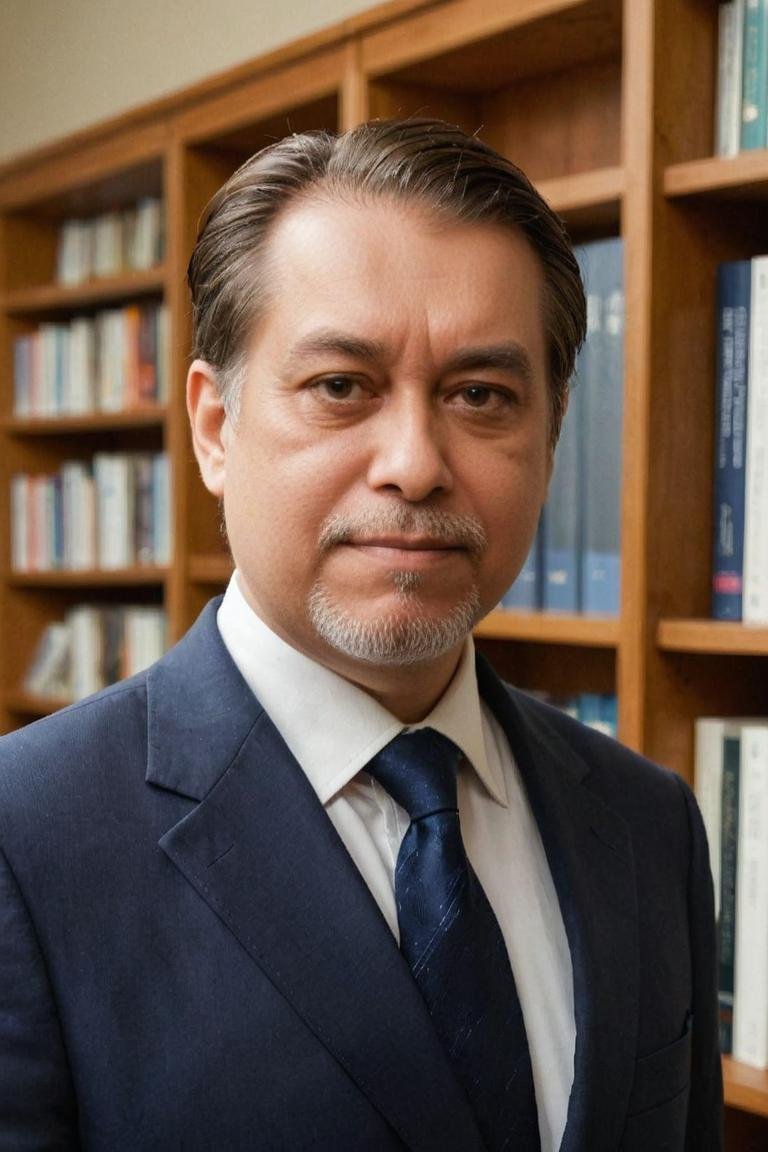
Dr. Dibyendu Choudhury is a National Teachers' Award 2023 recipient, conferred by the President of India, former faculty at NI-MSME (Ministry of MSME, Government of India), Professor of Practice at Siddaganga Institute of Technology, and the author of nine books. His books including Be The Leader Not A Boss, Secret of Nagamani, and Operation Gelisko are available at amazon.in.
Stay ahead of India knowledge economy. Subscribe to Dr. Choudhury newsletter. Subscribe here