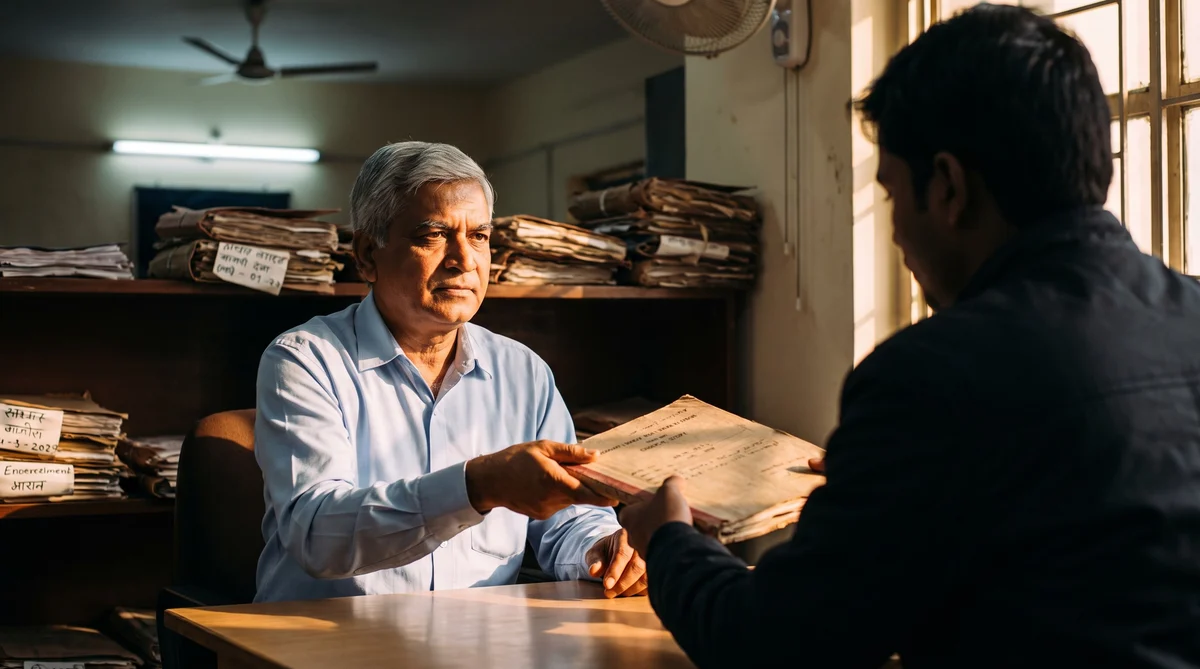
The Bhagavad-gita was delivered on a battlefield. But its lessons were never only for warriors. They were for anyone who has ever stood at a crossroads — uncertain, afraid, and needing clarity. Today we explore International Gita Seminar at Tokyo University strengthens India.
Setting the Scene
The Bhagavad-gita opens on a battlefield — but International Gita Seminar at Tokyo University strengthens I is a teaching for anyone who has ever stood at a crossroads. Arjuna, the greatest archer of his age, drops his bow. Not from weakness — from moral confusion. Krishna's 18-chapter response is one of the most complete leadership manuals ever written. What makes the opening scene endure is its refusal to simplify: Arjuna's hesitation is not cowardice, and Krishna's response is not a pep talk. It is a sustained argument about how to act when every visible option carries real cost — which is precisely the condition most leaders find themselves in, long after the battlefield has been replaced by a boardroom or a family decision no one wants to make.
What Krishna Actually Said
In addressing international gita seminar at tokyo university strengthens i, Krishna does not offer comfort. He offers precision. He asks Arjuna — and every reader — to examine the basis of their decisions: fear, ego, attachment to outcome, or a clear sense of duty? The teaching invites full engagement with life — without the paralysis of attachment to results. Krishna's method is worth noting as much as his conclusion: he does not simply tell Arjuna what to do. He walks him through the reasoning, layer by layer, until the right action becomes self-evident rather than imposed. That distinction — between compliance and genuine understanding — is itself one of the Gita's quieter teachings about how real conviction is built.

The Sanskrit Foundation
Yoga-sthaḥ kuru karmāṇi saṅgaṁ tyaktvā dhanañjaya / siddhy-asiddhyoḥ samo bhūtvā samatvaṁ yoga ucyate
"Be steadfast in yoga, O Arjuna. Perform your duty and abandon all attachment to success or failure. Such evenness of mind is called yoga." (Gita 2.48)
Why the Modern Mind Resists This
The modern mind has been trained to optimise outcomes. Every action is evaluated against its expected return. This creates a specific suffering: the inability to act freely, because every action carries the weight of its possible failure. The Gita's invitation is to act from clarity — not from fear of getting it wrong. This is not a call to indifference about results — Krishna never asks Arjuna to stop caring whether Kurukshetra is won. It is a much more precise instruction: separate the quality of your action from your anxiety about its outcome, because the anxiety changes nothing about the result and everything about how clearly you can act in the present moment.
Applying This in Your Life and Work
Applying International Gita Seminar at Tokyo University strengthens I in practice means building the habit of asking, before any decision: what is the right action here, independent of what it produces for me? Leaders who operate from this place are, paradoxically, more effective — because they are not crippled by the fear of being wrong. In practice this looks less like stoic detachment and more like a specific discipline: naming the decision, naming what you are afraid the outcome will be, and then consciously setting the second aside long enough to answer the first with full attention.
What This Looks Like in Practice
- Before any significant decision, separate the 'right action' question from 'what will this produce for me'. Answer the first. Act on it.
- Begin meetings by defining success in terms of process quality — not outcome. What must we do well today, regardless of the result?
- At day's end, review not what you achieved but what you chose — and whether those choices were aligned with your values, not with how the day happened to turn out.
A Reflection
The wisdom in International Gita Seminar at Tokyo University strengthens I is not passive acceptance. It is active, engaged, committed action — free from the paralysis of attachment. As relevant in a boardroom as it was on the field of Kurukshetra. It is worth sitting with how counterintuitive this actually is: we tend to assume detachment produces less effort, less care, less investment. The Gita argues the opposite — that attachment to outcome is what limits full effort, because part of the mind is always hedging against failure rather than fully committing to the action in front of it.
A Deeper Reading
Read alongside the rest of the second chapter, International Gita Seminar at Tokyo University strengthens I is not an isolated verse — it is the philosophical spine Krishna returns to again and again as Arjuna's questions grow more practical. The teaching deepens rather than repeats: each return to the theme adds a layer of nuance about what steady action actually requires in a world that keeps score by outcomes. By the time the dialogue reaches its later chapters, the same principle reappears translated into the language of devotion, discipline, and knowledge — three different vocabularies converging on the same underlying instruction about how to act without being owned by the result. Readers who only encounter this teaching in isolated quotation often miss that repetition — and miss how deliberately the Gita builds the same insight from multiple directions, as though anticipating that no single framing would land for every kind of reader.
What This Means for Today's Leader
For today's leader, International Gita Seminar at Tokyo University strengthens I translates into a simple discipline: define the right action before you know the result, and hold to it regardless of which way the outcome breaks. Boards, markets, and teams reward the appearance of certainty — the Gita asks for something harder and more durable: clarity of process, held independently of applause or blame. The leaders who internalise this tend to be recognisably different in one specific way: their decision quality does not visibly degrade under pressure, because the pressure itself — the fear of a bad outcome — has been separated from the act of deciding. It is a learnable discipline, not an innate temperament — which is, in the end, the most practical part of what the Gita offers a modern reader: not a philosophy to admire from a distance, but a method that can be practised, tested, and refined one decision at a time.
"The Gita does not ask you to abandon the world. It asks you to engage it — fully, wisely, without fear." — Dibyendu Choudhury
📬 Join 49,000+ Indian Professionals
The Inner Circle newsletter delivers curated MSME intelligence, leadership wisdom, and strategic insights every week — completely free. Plus receive the 20 Gita Lessons PDF as a welcome gift.
Subscribe Free →Ready to Go Further?
Explore my books on the Bhagavad-gita, leadership, and ancient wisdom — available on Amazon India.
Get the Book on AmazonPublished 22 July 2026 · dibyenduchoudhury.com