The great Indian epics were never just stories. They were mirrors — held up to the most difficult questions human beings face: about duty, loyalty, justice, and identity. Today's reflection is on Mahabharata’s Global Political Legacy Explained (2026).
The Scene That Changes Everything
The Mahabharata does not deal in simple heroes and villains. Mahabharata’s Global Political Legacy Explained (2026) is one of those moments where the narrative demands the reader sit with moral ambiguity — where every option carries a genuine cost, and the 'right' answer is not obvious even in retrospect.
What Most Retellings Miss
Most retellings focus on action — battles, betrayals, curses. What they miss is the interior life of each character: the moment of choice before the action, when every option is visible and every cost is clear. It is in these moments that the epic truly speaks.
The Dharma Question at the Heart of It
The Mahabharata's central preoccupation is dharma — not as a fixed rule but as a question answered freshly in each situation. In the case of Mahabharata’s Global Political Legacy Explained (2026): what does right action look like when loyalty conflicts with justice? These are not ancient questions. They are today's questions, wearing ancient clothes.
Why This Character Still Speaks to Us
The reason Mahabharata’s Global Political Legacy Explained (2026) continues to resonate is that the dilemma it presents has not been solved. We still live in a world where extraordinary ability can be negated by circumstance of birth, where institutional systems reward compliance over excellence, where the question of whether to fight a rigged game has no clean answer.
Lessons for the Modern World
- Greatness is not diminished by circumstance — what you do with what you have defines you, not what was withheld from you.
- The system will not always recognise you. Build your identity independent of its validation.
- Dharma is not a formula. It is the discipline of asking the right question in the right moment — even when the answer is costly.
In My Books
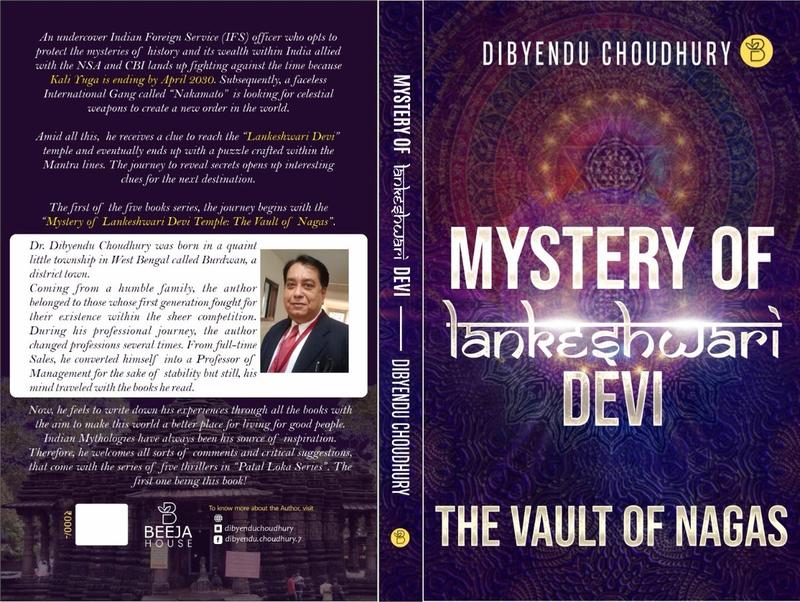
These questions are at the heart of my fiction and non-fiction work. The characters I write are people at precisely this crossroads — where ancient wisdom meets contemporary pressure. If these themes resonate, I invite you to explore the books.
How This Story Reads in 2026
Read in 2026, Mahabharata’s Global Political Legacy Explained (2026) loses none of its force. Replace the battlefield with a boardroom, a courtroom, or a family dispute over inheritance, and the same pressures reassert themselves: loyalty pulling one way, justice another, and no institution willing to fully resolve the tension for you.
What the Epic Is Really Teaching
What the epic is really teaching through Mahabharata’s Global Political Legacy Explained (2026) is not a rule to follow but a habit of attention: notice when a situation is being simplified for your comfort, and resist the simplification. The Mahabharata rewards readers who sit with discomfort rather than resolve it prematurely.
"The Mahabharata does not give easy answers because it knows the questions are never easy." — Dibyendu Choudhury
Final Thought
The story at the heart of Mahabharata’s Global Political Legacy Explained (2026) is not a tragedy. It is a teaching. The mahabharata preserves it not to mourn — but to make us ask whether we would choose differently, and whether we have the clarity to know our own dharma in the moment it is required.
📬 Join 49,000+ Indian Professionals
The Inner Circle newsletter delivers curated MSME intelligence, leadership wisdom, and strategic insights every week — completely free. Plus receive the 20 Gita Lessons PDF as a welcome gift.
Subscribe Free →Ready to Go Further?
My mythology and fiction titles bring these stories alive for the modern reader. Available on Amazon India.
Explore My Books on AmazonDibyendu Choudhury
Former Director, Ministry of MSME, Government of India
Author of nine published books spanning mythology, leadership, and business strategy. Thirty-plus years advising Indian enterprises on MSME policy, credit systems, and industrial growth. Writing at the intersection of ancient wisdom and modern business.
Published 11 July 2026 · dibyenduchoudhury.com
Go deeper
Want the full playbook on this? Read Leadership Lessons from the Mahabharata: Ten Decisions — a companion e-book from the library.